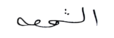
THE JUMP
Let’s talk about. Let me talk. To talk. Toc Toc Toc. Is writing talking?
I want to explore from here till the end of the year my inner fears. I am not sure explore is what I mean. To face them. I cannot face fear if I am not frightened first. Or am I always frightened always facing my fears; a continuous unilateral multidimensional stream of negotiation?
I am super excited to notice that Lebanese art galleries and curators are shifting and changing their narrative to accompany the positivism Lebanon needs in these national lonely times.
They planned following the zeitgeist of the region for more than forty years, narratives consolidated by ancient regimes and war money. They tried and succeeded in graining the very notion of fear at the core of the Lebanese culture.
Now I see some major galleries singing different tunes; color field artist, like Becoming Light’ of Ribal Molaeb at Saleh Barakat Gallery this week. iCloud seeing through child’s eyes, Julie Bou Farah at Janine Rubeiz… The art world is pulsing with geo-politics.
My fear, if this trend continues, is for positivism to become, like the previous pessimism, a propaganda instrument of controlled narratives against our realities.
I am jumping to the other side now.
THE MOST DANGEROUS BOOK
(In the Levant)
In Annahar’s special edition for Independence Day, “The history that was never taught” (al-Tarikh allazi lam yudarras), “First Republic” introduction I read:
“The Lebanese civil war that erupted on April 13, 1975 … a violent peak of a long accumulation of structural tensions that had been building since the moment of independence in 1943.” That sentence stopped me because it openly names the Lebanese original problem as “structural tensions”, the same tensions existing today. These tensions come from feudal authority and sectarian divisions that predate the state itself, exactly the forces Gibran Khalil Gibran described in his early work.
Gebran Khalil Gebran’s texts and books were never taught in school in the 70’s. I learned about him from friends; I read the Prophet first, then The Broken Wings, the Jesus The Son of Man which I didn’t finish. I loved him because his writings confirmed my Lebanese self-image as sensitive, elevated, spiritual, romantic, etc. Today some excerpts appear in school literature books but overall he is avoided. A status caught between celebration and discomfort.
But the real reason the educational system avoided him, especially as an early thinker, is because of a single book, Spirits Rebellious, that exposes the patriarchal, religious, and feudal structure of his time and describes disobedience as a way to counter traditions.
Written in 1908, Spirits Rebellious was a dangerous book that spoke to women, to peasants, to youth, to artists and intellectuals of rural Mount Lebanon and that is enough for religious institutions and entire educational system of the times to shadow him rather than celebrate him. The danger of Gebran Khalil Gebran doesn’t only come from the book but from its combination with his paintings. Put the two together and you get the full power of social rebellion he is proposing.
I always thought of his paintings as romantic, spiritual, poetic. But now I have a totally different reading.
If the book names the prison, his paintings show the prisoner.
HOPE?
Memory, Resilience, and Identity Machinery
I bet you to find a West Asian curatorial narrative that deviates from this triad. As if art is nothing but.
I read it everywhere, in every bio, in every proposal. 80% of AFAC proposals rely on this triad and her sisters. I even used it myself for some time.
But here is the danger of trauma, memory, identity, resilience, archive, war, post-war, fragmentation:
They freeze art in the past. They glorify suffering. They cancel the present. They flatten artist’s storyline until it stops describing anyone. They make art predictable, the artist self-victimized. But most importantly they prevent the emergence of new forms. When I ask why that is so, I often get the cliché answer: because hope.
Memory arises in the artistic discourse when there is no true will for closure, accountability, truth, or reconciliation. So the concept of memory turns as abstract as a white canvas; curators attach to it whatever they want, whatever pleases the funders, and thus artists become pseudo-historians with the moral obligation to serve hope by remembering war, pain, trauma (but please do forget corruption, failure, desire, etc.).
Living through crisis, like the one Lebanese, Syrians, and Palestinians are going through, becomes fertile ground to grow resilience. It is the preferred word of politicians, institutions, and curators to neutralize anger and to justify the repetition of trauma narratives. And like my father used to tell me since 1975: “Tomorrow things will get better.”
In 2019 during my solo show “And Tomorrow Who Am I?” at Artlab Beirut, I attacked identity directly by questioning the visitors about their understanding of identity. I even did a short documentary about the subject. What I realized is that each and every one had a different definition for identity. No two aligned. (you can watch here) My view is that identity dissolved and should be replaced, not by hope, but by silence as an anti-narrative.
Am I proposing to replace this hope triad narrative with a new one because it is wrong or because it is over?
But to be true to the spirit of the Lebanese, there are many truer angles than hope: Absurdism is one.
Color in the present tense
I think it is Nawal Al Saadawi that said in an interview once, that the naming of our region the Middle East is colonial because its point of reference is Europe. She suggests, if I remember well, the use of “West Asia” instead. Why not. I will adopt it.
By the way, I will be writing my opinions as I know how to write them to the maximum of my capacity and WITHOUT AI POLISHING. They will hopefully be helpful in some way, I am not sure how yet. It will come.
The name of this series is “I’s”. I will be using a lot of them because of the nature of art itself. As much as art can be distanced from its creator, it is also only about the creator. So “I’s” makes sense.
Who am I talking to? And why? And why now? All these questions are unanswered.
Somewhere in 2021 I wrote an art exhibition proposal to Galerie Janine Rubeiz in Beirut. I started it with a questioning of why the art world in Lebanon should be less corrupt than the system it is feeding and feeding on. With the idea of reclaiming all colors and stripping them from their political associations, and the reason is the huge number of parties covering the whole visual spectrum. Reclaim the Rainbow One Color at a Time was the mission. My observation is that the Lebanese living in Lebanon (4 million) have been formatted throughout years of media frenzy on such a small population to love some colors and to hate others. Since then, colors, the soul of art, got corrupted…
I have always been interested in the present tense of art, what is happening today. What artists are doing now. How they are reacting to what is happening now. I get my energy from the living. The past is human, not historical. The use of colors, intensity, saturation, atmosphere, etc. can tell you a lot about where the artist is living: the past or the present. Subject and subject matter are secondary, they both could be absent from a work of art, but never color. For example: Amine El Basha painted in the present tense. Hussein Madi past tense. Etel Adnan present tense. Salwa Rawda Choucair definitely painted in the present tense. Shafik Abboud swinging continuously between past and present. Joana Hadjithomas and Khalil Joreige past tense.
I do not understand how an artist is not affected by his time. Of course all this is personal opinion and is open for debate.
But what are the colors of the time? It is not Pantone, interior designers, fashion people electing the color of the year. What I am talking about runs deeper, instinctual. Examples are many: Rothko’s colors leaning towards darkness were the effect of nuclear threat; everything is about to get darker. Germany after WWII: artists removed color entirely in response to polarization; pure white, metallic grey. Yves Klein wanted color to break free from earthly politics; he invents a pure, hyper-saturated blue, known today as IKB. So contemporary artists trying to extend the possibilities of colors are interesting to me.
From my generation Lebanon, Ayman Baalbaki’s ordered color cacophony is present tense. Taghreed Dargouth’s atmospherics are past tense. Charles Khoury present tense, I can go on and on. Is this past–present a value judgment? Yes, I think it is.
Lebanese museums and their donors are in love with memory and nostalgia. Practically every art event is tied to memory, thinking memory would help us cope with the present, as beacons of hope sedating an entire population. But it should be the other way round: the present should help us cope with our past. Show me a dissonant chromatic-temperature painting done in 2025 and tell me Mr. Curator how this work is a reaction (if it is) to West Asia conflict, 2019 or 2023 or even 1975. But please do not show me colors from the past and tell me to remember how great we are, because we are not. Let’s stop shielding against the present realities.
Disclaimer
All texts published on this website represent personal opinions, artistic interpretations, and subjective analysis. They do not assert factual claims about any individual or institution unless explicitly supported by verifiable public information. Any mention of artists, galleries, critics, or organizations appears within the context of cultural commentary and constitutes fair opinion under freedom of expression.